Cookies help us deliver our services. By using our services, you agree to our use of cookies.
Search
Back to all
Drone technology explained
23 Nov 2026
From UAVs and vertical take-off to collaborative aircraft, discover the technology behind uncrewed flight — and why component selection matters.
Drones are not a single type of aircraft. They range from compact platforms to aircraft-sized systems, with different designs suited to different tasks. In defence, their roles span surveillance, mapping and support for crewed aircraft.
Understanding those differences starts with the terminology. It also means looking beyond the airframe to the components that must deliver reliable performance within tight limits on space, weight, power and cost.
What is a drone? Understanding UAVs and UAS
In this article, “drone” refers to an aircraft without a pilot on board. It may be remotely piloted or use automated functions; uncrewed does not necessarily mean fully autonomous.
UAV stands for unmanned aerial vehicle, also commonly described as an uncrewed aerial vehicle. UAS stands for unmanned or uncrewed aircraft system and describes the wider combination of aircraft and supporting equipment. The aircraft is just one component of the complete system.
That distinction matters when considering performance. The aircraft, its control equipment and its communications links need to work together, rather than as separate pieces of technology.
Different types of drones
The right aircraft configuration depends on the task. Hovering in one position, covering a wide area and operating without a runway each place different demands on a design.
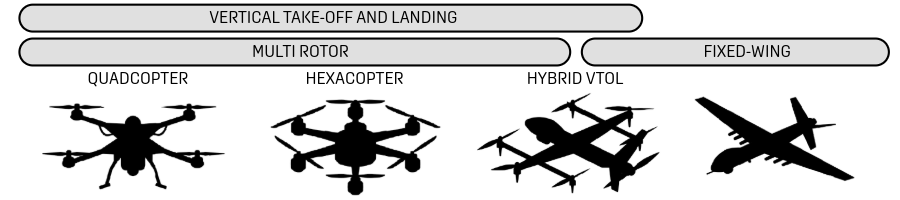
- Single-rotor drones use a helicopter-style configuration, with a main rotor providing lift.
- Multirotor drones use several rotors, from 3 to 8, to generate lift. Their ability to hover and take off vertically makes them useful for observation and work in restricted spaces. Quadcopters with four rotors are most common, however the more rotors a drone has, the greater the stability and the ability to maintain a precise location. More rotors usually means a larger and heavier drone which requires more power.
- Fixed-wing drones generate lift through forward movement over their wings. They are often suited to covering larger areas and longer-duration flights, but conventional designs need a suitable launch and recovery arrangement.
- Hybrid and VTOL drones combine vertical take-off and landing with wing-borne forward flight. They offer runway-independent operation alongside the efficiency of a fixed-wing aircraft in cruise, although the additional systems introduce design complexity.
Each configuration involves trade-offs between hover capability, endurance, payload and mechanical complexity. No one design is best for every application.
How are drones powered?
Power sources vary with the aircraft and its task. Small drones commonly use rechargeable lithium-polymer (LiPo) or lithium-ion batteries to supply their electric motors, although stored energy and charging requirements limit endurance and influence operational planning. Larger or longer-endurance aircraft may use fuel-burning engines, while hybrid-electric systems combine an engine-driven generator with batteries. Less common alternatives include hydrogen fuel cells, which generate electricity on board, and solar-assisted systems for suitable fixed-wing designs.
Each option brings trade-offs in weight, flight duration, maintenance and charging or refuelling infrastructure.
How are drones launched?
Launch methods depend on the aircraft’s design, not simply its size. Some fixed-wing drones use a catapult or bungee launcher to reach flying speed, while larger conventional aircraft may require a runway.
VTOL means vertical take-off and landing. Rather than accelerating along a runway, the aircraft lifts vertically. This can be valuable where space is limited, including shipboard operations, although the aircraft still needs a suitable operating area and appropriate environmental conditions.
How drones are used in defence
Surveillance and reconnaissance are central themes in defence drone applications. Aircraft carrying cameras or other sensors can support observation, cartography and monitoring of movement, helping build a clearer picture of an area.
Drones can also provide information used in wider military decision-making, including support for artillery and missile operations. Specialist roles include electronic warfare, such as stand-in jamming, and decoy missions. The aircraft’s purpose determines the equipment it carries and the performance it must deliver.
What are Collaborative Combat Aircraft?
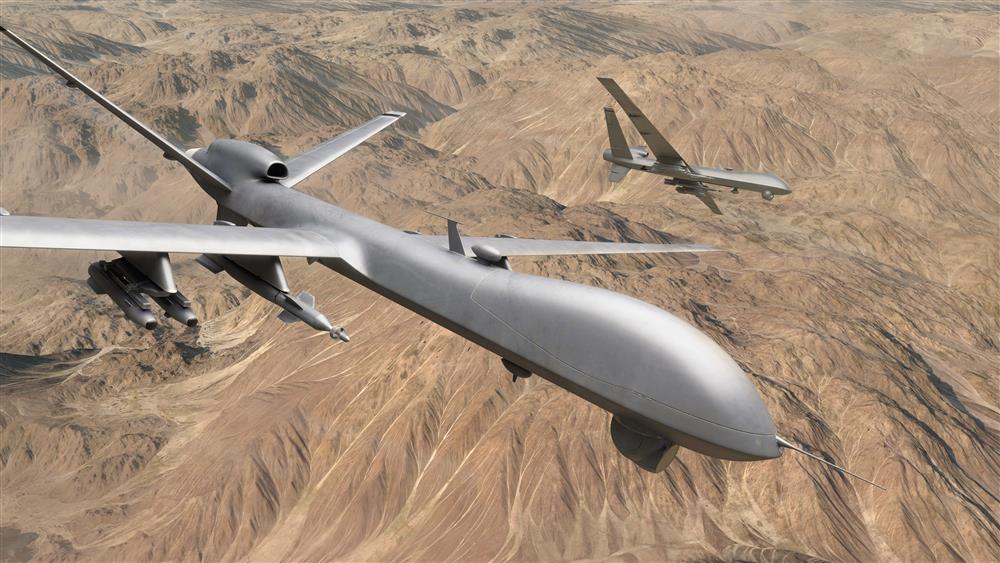
Collaborative Combat Aircraft (CCA) are uncrewed aircraft designed to work alongside crewed combat aircraft. Often associated with the “loyal wingman” concept, they illustrate the shift towards human–machine teaming rather than treating every drone as a standalone platform.
What benefits can drone technology offer?
The potential benefits depend on the aircraft, its task and the support needed to operate it. Three themes stand out:
- Persistent coverage. Drones can contribute to sustained surveillance. Around-the-clock coverage is a system-level objective, however, rather than a promise that an individual aircraft can remain airborne indefinitely.
- Cost flexibility. Lower-cost platforms can offer alternatives for some tasks, but affordability must be considered across the complete system, including equipment, maintenance and operational support.
- Collaborative operation. Uncrewed aircraft working together, or alongside crewed platforms, can distribute tasks across multiple assets rather than relying on a single aircraft.
These benefits are not automatic. The practical value of a drone depends on how well its design and supporting systems match the intended application.
The future of drone technology in defence
The themes shaping future development include greater autonomy, collaborative aircraft and distributed operations. Rather than concentrating every task in one platform, distributed operations spread activity across multiple systems, including sustained surveillance.
Counter-drone defence is also part of the picture. As uncrewed systems develop, protection against them remains an important consideration. The future is therefore not just about adding more capability to drones, but also about how they fit into a wider operational environment.
Why component selection matters: understanding SWaP-C
Behind every drone design is a balancing act. Components may need to withstand harsh operating conditions while remaining compact, lightweight and affordable. Improving one characteristic can place pressure on another, so selection needs to consider the complete aircraft rather than a component in isolation.
SWaP-C stands for size, weight, power and cost. It provides a useful framework for those decisions:
- Size: will the component fit within the available space and integrate with the rest of the system?
- Weight: how does it contribute to the aircraft’s overall mass and payload allowance?
- Power: what electrical demand does it place on the available energy budget?
- Cost: how does the choice balance affordability with the required performance and reliability?
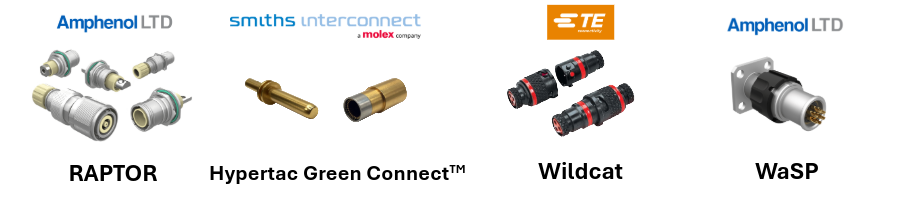
SWaP-C optimisation is not simply a matter of swapping every part for the smallest or cheapest alternative. The aim is to meet the application’s requirements while managing all four constraints together. Many of the manufacturers Aerco work with have produced connector ranges for this purpose.
For engineering and procurement teams, that means defining the operating environment, integration needs and performance priorities early. A lightweight solution is only useful if it also delivers the reliability the application demands.
From aircraft capability to component requirements
Understanding drone technology means connecting the intended task with the aircraft design and, ultimately, the components inside it. Whether the priority is endurance, vertical flight or collaborative operation, those choices return to the same challenge: achieving the required capability within practical limits.
Planning a drone or uncrewed aircraft project? Discuss your component requirements with Aerco.
☎️ Call Aerco on +44 1403 260206

.png)
Call +44 1403 260206
Email [email protected]